

High speed doors are fast-cycling automatic industrial doors used to reduce air exchange, support cleaner process separation, and keep forklifts or pedestrians moving with less interruption. They are most valuable at openings where environmental control and traffic efficiency matter at the same time.
In food processing, logistics, manufacturing, and controlled environments, the right high speed door is really an operational control device. It helps maintain process separation, cleanliness, temperature stability, and traffic discipline at the same time.
Why facilities invest in high speed doors
- They reduce exposure to dust, insects, heat, humidity, and conditioned air loss.
- They improve traffic flow at repetitive forklift and pedestrian openings.
- They support zone separation between cleaner and less-controlled process areas.
- They can reduce damage and downtime when the selected model matches the site conditions.
Main high speed door types and where they fit
| Door type | Best for | Main strength | What to review |
|---|---|---|---|
| Standard roll-up high speed door | General internal factory and warehouse traffic | Fast cycling and flexible daily use | Curtain durability and cycle volume |
| Zipper high speed door | Clean areas, pressure control, wind-sensitive openings | Self-reinserting curtain and tighter sealing | Opening size and wind conditions |
| Spiral or rigid high speed door | External openings with security and insulation needs | High speed with rigid construction | Budget, footprint, and structural behavior |
| Insulated or specialty models | Cold chain or controlled environments | Better thermal separation | Temperature delta and service access |


How to match the door type to the traffic pattern
A high speed door should be selected by the movement pattern around the opening. Internal openings between process zones usually prioritize speed, hygiene, and cycle count. External openings usually bring wind, weather, and security into the decision, which can change the model choice completely.
If you are still comparing systems, start with the high speed doors overview page, then compare the standard high speed door model and the zipper high speed door model based on real operating conditions rather than marketing labels.
Controls and safety features that change real performance
A door can only perform well if the activation and safety logic match the site. Radar sensors, photocells, light curtains, pull-cord control, and loop detectors all affect how smoothly the system behaves in daily industrial movement. Facilities that need a broader loading interface should also compare this against the loading dock equipment guide when the opening sits near truck operations.


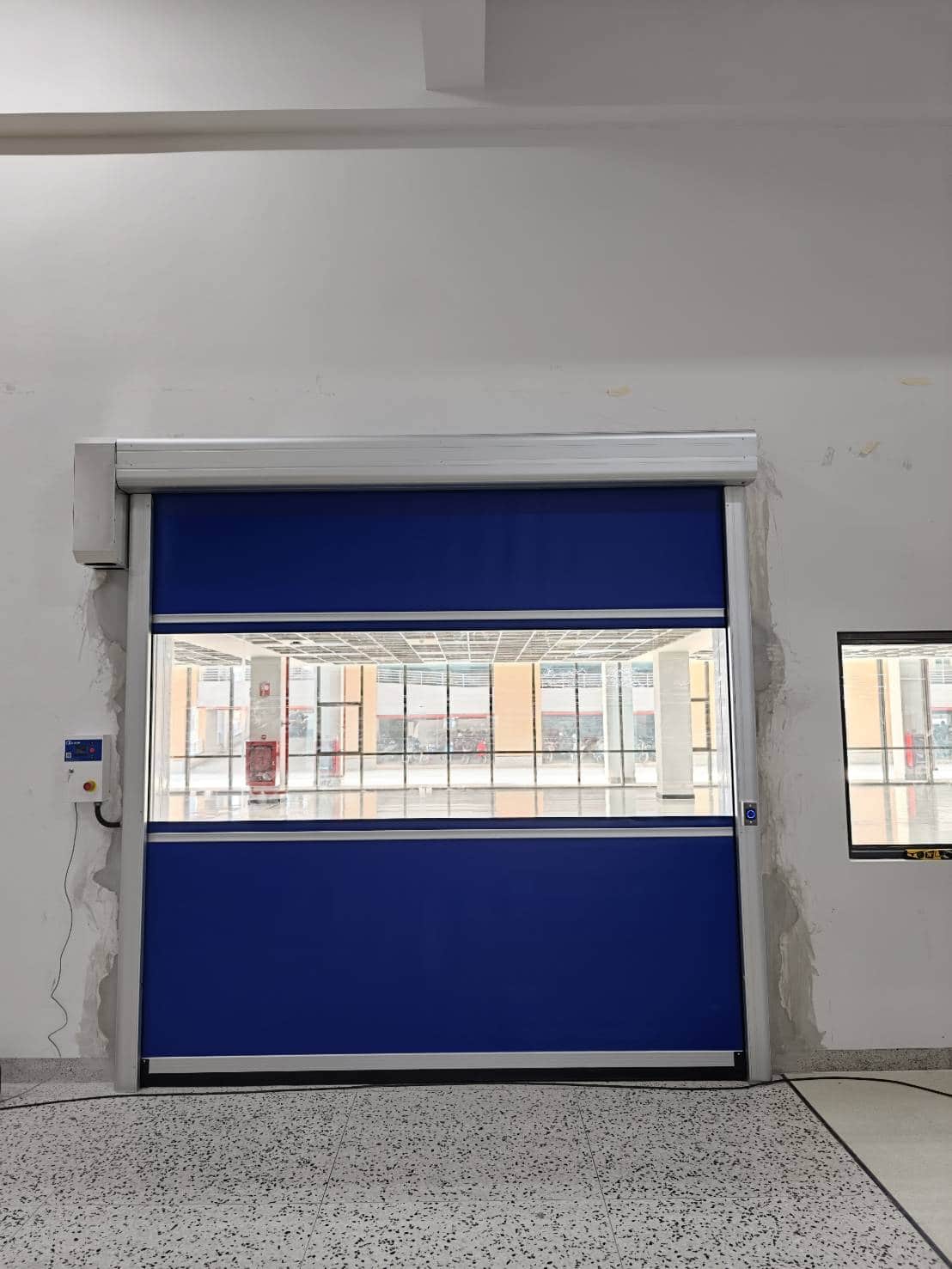
Why more than four reference photos matter for this door category
High speed door selection is highly context-driven. Seeing several reference conditions helps buyers compare curtain behavior, visibility, frame integration, opening size, and traffic type. For this reason, this article intentionally uses multiple project images instead of relying on one hero photo alone.
Frequently asked questions about high speed doors
Most buyers narrow the shortlist by asking practical questions about where the door will be used, what traffic passes through it, and how much sealing or recovery capability is actually required.
Are high speed doors only for large factories?
No. They are common in factories and logistics centers, but any site with frequent movement, environmental separation needs, or repetitive opening cycles can benefit from them.
What is the biggest mistake when choosing a high speed door?
Choosing only by speed claim. Wind load, traffic type, sensor logic, curtain recovery behavior, and opening environment matter just as much.
When is a zipper model better than a standard roll-up model?
A zipper model is often preferred where sealing, self-reinsertion, and stable behavior in controlled environments are important.
Should safety sensors be part of the initial specification?
Yes. Sensor planning should happen at specification stage because mixed pedestrian and forklift traffic changes the risk profile of the opening.
Reference video
This short video helps illustrate the motion profile and operating behavior of a high speed industrial door in real use.

The best high speed door is the one that matches the traffic pattern, environmental requirement, and safety logic of the opening.
Related Articles


